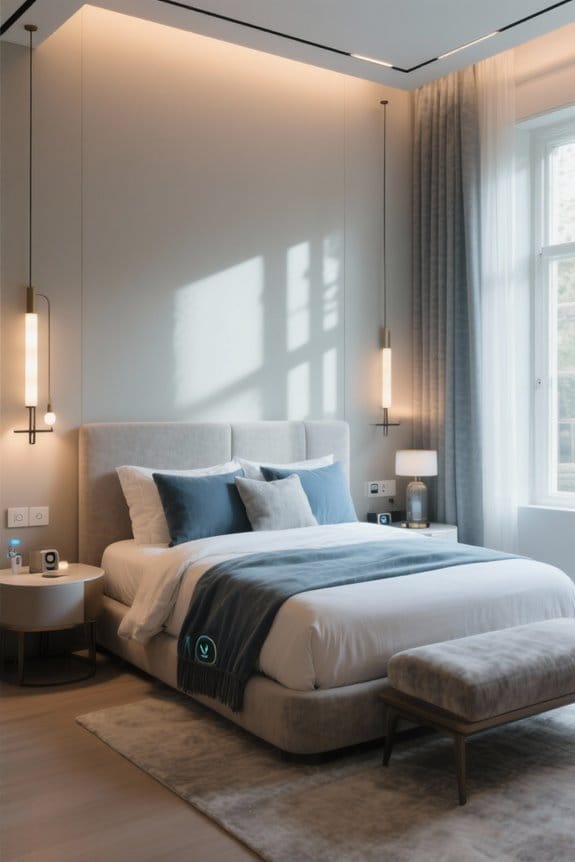
Layered lighting in bedrooms combines ambient, task, and accent illumination, enhancing both functionality and aesthetics. This approach fosters a soothing atmosphere essential for relaxation, while adjustable fixtures, such as LED floor lamps offering a color temperature of 2700K to 3000K, cater to personal activities. Accent lighting, like brass fixtures or LED strip lights, highlights design features, adding flair. Smart dimmers also allow effortless control of brightness, promoting better sleep and overall wellness. Discover more on how to create your perfect space.
Key Takeaways
- Layered lighting combines ambient, task, and accent lighting, enhancing functionality and aesthetics in the bedroom.
- It supports relaxation by adjusting color temperature and intensity, promoting better sleep quality.
- Energy-efficient LED options reduce consumption, contributing to a more sustainable living environment.
- Accent lighting highlights design features and personal decor, adding visual interest to the space.
- Adjustable and smart lighting features provide personalized control, enhancing overall user experience and comfort.
Understanding Layered Lighting in Bedrooms
Layered lighting in bedrooms serves as a fundamental aspect of interior design, creating environments that are both functional and visually appealing. This approach combines ambient lighting, such as charming ceiling-mounted fixtures, with task lighting provided by bedside lamps and wall sconces. These elements work together to reduce eye strain during activities like reading, enhancing overall usability. Meanwhile, accent lighting—like backlit headboards or strategically placed picture lights—introduces visual interest, highlighting unique design features and fostering a cozy atmosphere. By carefully adjusting lighting intensity and color temperature throughout the day, residents can enhance comfort and support their circadian rhythms. This versatile layering not only improves relaxation but also creates a beautifully illuminated sanctuary tailored to individual needs and preferences. Incorporating energy-efficient LEDs in your bedroom lighting can reduce energy consumption and align with sustainable living practices.
The Importance of Ambient Lighting
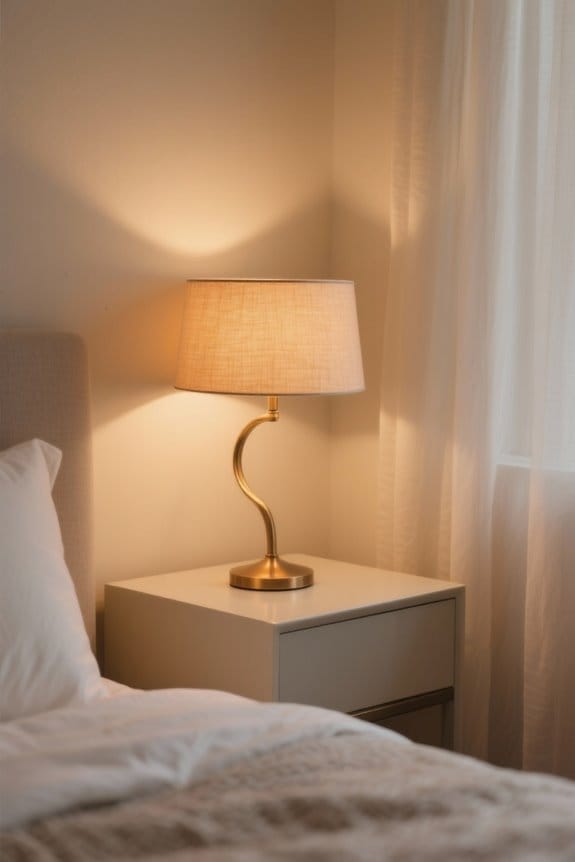
Creating a warm and inviting atmosphere in the bedroom greatly hinges on the importance of ambient lighting. This primary source of illumination, provided by lighting fixtures such as ceiling-mounted lights or chandeliers, casts a soft glow that enhances overall visibility and comfort. Ideally, the color temperature for ambient lighting should fall between 2700K to 3000K, creating a cozy atmosphere essential for relaxation and restful sleep. Additionally, integrating smart bulbs with adjustable brightness allows homeowners to tailor lighting levels for nighttime activities or simply unwinding. A well-planned ambient lighting scheme not only balances natural light during the day but also guarantees a soothing environment, demonstrating the critical role it plays in enhancing everyday living spaces. Furthermore, incorporating energy-efficient LED floor lamps can significantly reduce electricity consumption while providing versatile lighting options for various bedroom settings.
The Role of Task Lighting in Bedroom Activities
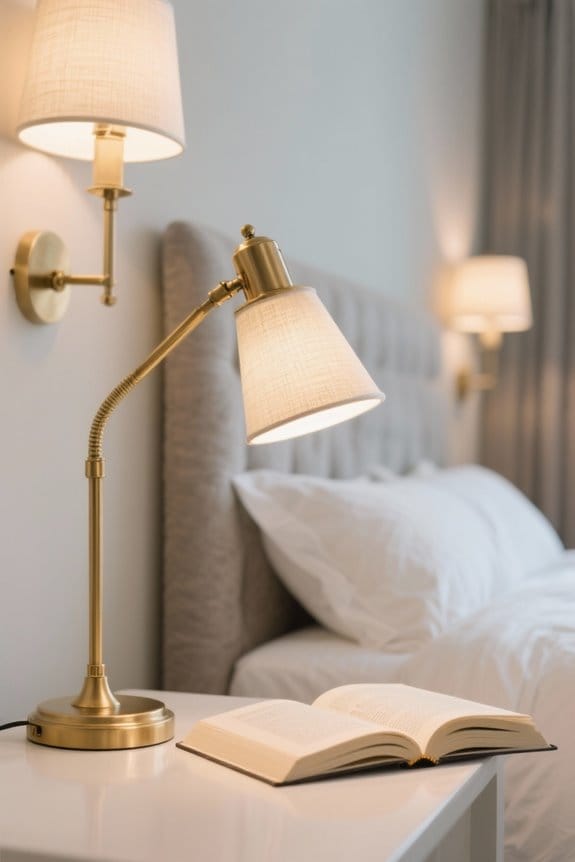
While many individuals may overlook task lighting in the bedroom, its importance cannot be understated, especially for activities like reading or studying. Effective task lighting enhances functionality by providing focused illumination that can greatly reduce eye strain. Common fixtures include bedside table lamps and adjustable reading lights, which can be strategically positioned to avoid harsh shadows. Additionally, utilizing dimmable lighting options allows users to easily adjust brightness according to their needs or mood. Incorporating multiple light sources contributes to a versatile environment, seamlessly supporting shifts between relaxation and productivity. Designers recommend choosing fixtures made from materials like brass or matte finish metals for an aesthetic touch, ensuring that task lighting serves both practical and decorative purposes in modern bedrooms. Some floor lamps with shelves, like the Mlambert Modern Shelf Floor Lamp, offer additional features such as wireless charging and multiple tiers for storage, enhancing both convenience and style in bedroom settings.
Utilizing Accent Lighting for Design Flair
Accent lighting serves as an essential element in bedroom design, as it highlights specific features and adds a unique flair to the overall aesthetic. By focusing on design elements like artwork and architectural features, accent lighting enhances visual appeal and creates inviting spaces. Wall sconces or picture lights not only provide functional light but also enrich the bedroom’s decor. Incorporating LED strip lights behind the bed or along shelves offers a subtle yet modern accent that enhances ambient light. Adjustable accent lights provide customization, allowing one to easily switch the mood and atmosphere, whether lively or calming. In addition, accent lighting creates depth and dimension, making the bedroom feel more expansive and welcoming, elevating it from a simple room to a stylish retreat. Many wall sconces feature adjustable color temperatures, allowing for versatile lighting options that cater to different activities and moods.
Benefits of Adjustable Lighting Features
Adjustable lighting features provide an incredible advantage in bedroom design, as they offer versatility and control over the atmosphere. By allowing precise adjustments in brightness levels, individuals can shift from bright, energizing light during morning routines to soft ambient light in the evening. Incorporating smart lighting technology further enhances convenience, enabling remote adjustments or voice commands to create the desired ambiance for various activities. Dimmers promote relaxation through dim lighting, aiding melatonin production and enhancing sleep quality. Additionally, adjustable color temperature options support natural circadian rhythms, adapting from invigorating whites to calming hues. Flexible lighting solutions, such as bedside lamps with variable brightness, help reduce eye strain during late-night reading, improving functionality while maintaining aesthetic appeal. Many modern table lamps now offer USB ports and AC outlets, allowing for convenient device charging while ensuring a clutter-free environment.
Creating a Relaxing Atmosphere With Layered Lighting
Creating a calming environment in a bedroom involves the thoughtful application of layered lighting, which merges ambient, task, and accent lighting to offer a customizable and inviting space. Ambient lighting, often provided by ceiling fixtures or soft table lamps, creates a soothing glow that enhances relaxation. Dimmable options further allow individuals to adjust the brightness based on their mood or the time of day. Task lighting, such as bedside lamps, delivers focused illumination for reading or other activities, minimizing eye strain. Accent lighting, like stylish wall sconces, elevates bedroom decor by highlighting art or architectural features. Utilizing warm white bulbs (2700K–3000K) reinforces this calming atmosphere, fostering a retreat-like feel conducive to relaxation. Modern lighting solutions also offer significant cost savings on electricity bills, making them both an aesthetic and economical choice for creating an ideal bedroom environment.
Enhancing Sleep Quality Through Proper Lighting
To guarantee a restful night’s sleep, it is essential to establish the right lighting conditions within a bedroom, as this plays a crucial role in supporting natural circadian rhythms. Layered lighting techniques allow for ideal customization; using ambient lighting with warm light temperatures promotes relaxation, while dimmable options can gradually signal the body it’s time to wind down. Task lighting, strategically placed at bedside, enables readers to engage in calming activities without the glare of harsh overhead lights, ensuring their comfort. Incorporating accent lighting with soft, warm hues can create a tranquil atmosphere, effectively reducing stress. Studies indicate that this thoughtful approach to lighting greatly enhances sleep quality, leading to improved overall well-being when individuals design their spaces with these principles. Using LED dimmer switches enhances energy efficiency and offers versatile control over lighting ambiance, further contributing to a serene sleep environment.
Personalized Lighting Solutions for Individual Preferences
While individuals often have varying preferences regarding lighting in their bedrooms, personalized lighting solutions can greatly enhance their comfort and mood. Options like adjustable bedside lamps allow users to customize intensity, creating a soothing atmosphere as they wind down. Task lighting, such as reading lamps with focused beams, supports hobbies or late-night reading without disturbing others. Accent lighting, including wall sconces or LED strips, showcases personal decor while providing mood-enhancing visual effects that align with individual styles. Furthermore, smart lighting systems give users the ability to automate lighting changes based on their emotional needs and tailored schedules. By integrating these elements, one can achieve a harmonious balance that meets specific preferences, transforming the bedroom into a truly personal sanctuary. Additionally, smart dimmer switches can be incorporated to further personalize lighting, allowing seamless control over brightness and ambiance to suit individual preferences.
Tips for Choosing the Right Fixtures
Selecting the right fixtures for a bedroom markedly transforms its overall ambiance, enhancing both functionality and style. Incorporating layered lighting, including ambient lighting such as flush mounts or chandeliers, can create a warm and inviting atmosphere. Adding bedside lamps with adjustable brightness facilitates personalized task lighting for reading, ensuring minimal disturbance to a partner. Incorporating accent lighting, like wall sconces, adds visual interest and depth. Choosing warm white bulbs (2700K–3000K) enhances relaxation, promoting a cozy atmosphere. It’s also essential to select bedroom fixtures proportionate to the room size; larger spaces benefit from statement chandeliers, while smaller areas may require compact solutions. Utilizing smart bulbs allows easy adjustments in brightness and color temperature, shifting seamlessly from vibrant mornings to tranquil evenings. Regular use of air purifiers can significantly enhance indoor air quality by reducing allergens, dust, and pollutants, which is especially beneficial for households with pets or individuals suffering from respiratory issues.
Integrating Smart Lighting Technology
Integrating smart lighting technology into the bedroom not only enhances the overall ambiance but also caters to individual preferences, ensuring that lighting adapts to lifestyle needs. By implementing layered lighting systems, homeowners can customize brightness levels and color temperatures for different activities. Utilizing voice-activated assistants, such as Amazon Alexa or Google Assistant, allows for effortless adjustments to lighting settings without leaving the comfort of the bed. Automated lighting, tied to personal routines or time of day, fosters a seamless environment conducive to relaxation. Furthermore, smart dimmers and programmable schedules help reduce harsh nighttime lighting, enhancing sleep quality. By effectively managing controlled lighting through smartphone apps, users can optimize energy efficiency, leading to lower electricity costs while enjoying a beautifully lit sanctuary. Many wireless charging stands include safety features such as overcurrent and overheating protection, ensuring a secure charging experience while enhancing overall convenience.
Frequently Asked Questions
Why Is Layered Lighting Important?
Layered lighting is important for enhancing functionality and relaxation. It offers mood lighting effects, ambient lighting benefits, and task lighting essentials. Additionally, it supports design flexibility, space perception, and energy efficiency, while highlighting decorative elements effectively.
What Is the 5 7 Lighting Rule?
The 5-7 lighting rule recommends utilizing various lighting types and light bulbs to achieve 5 to 7 watts per square foot, enhancing bedroom ambiance by accommodating style preferences, color temperature, and ceiling height through effective light placement.
What Is the Golden Rule of Lighting?
The golden rule of lighting emphasizes integrating ambient light, task lighting, and accent illumination, along with careful fixture placement and light temperature management, using dimmer switches for mood enhancement, while considering natural light, color schemes, and energy efficiency.
What Is the Best Light Style for a Bedroom?
Research indicates that 85% of people prefer soft illumination in bedrooms. The ideal style combines ambient light from overhead fixtures, task lighting from bedside lamps, and decorative sconces, with dimmable switches to create serene, romantic settings.