
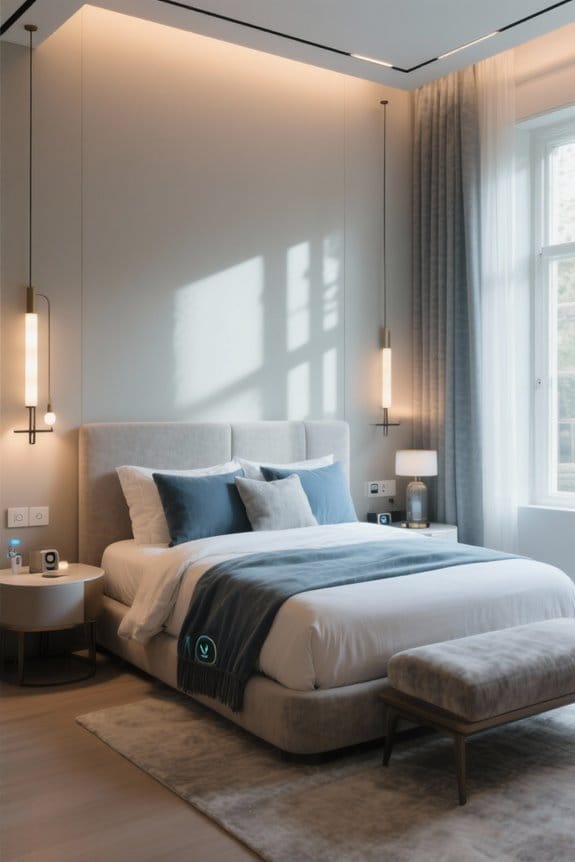

Smart lighting integration enhances home automation, effectively combining light control and technology. It relies on connectivity protocols like Zigbee and Z-Wave, ensuring compatibility with existing fixtures. Popular choices include the Kasa Smart Light Bulb KL110, known for its energy efficiency and customizable features. Installing smart plugs can streamline non-smart devices into this system. By exploring community resources, one can uncover future trends and advancements that could redefine home illumination, leading to even more innovative solutions.
Key Takeaways
- Smart lighting integrates with home automation via technologies like Wi-Fi, Zigbee, and Z-Wave, allowing seamless control through hubs and apps.
- Compatibility with existing systems is crucial; ensure your smart lights meet standards like BACnet, DALI, and KNX for effective integration.
- Choose from smart bulbs, switches, plugs, and strips to customize lighting setups based on your home’s needs and existing fixtures.
- Using a smart hub enhances connectivity and enables coordinated routines with other smart devices for improved automation.
- Future trends include energy-efficient technologies and machine learning, which will further enhance the effectiveness of smart lighting solutions.
Overview of Smart Lighting Integration
Smart lighting integration serves as the bridge between modern illumination and home automation, enhancing user experiences while promoting energy efficiency. By utilizing wireless technology such as Wi-Fi, Zigbee, and Z-Wave, smart lighting systems can seamlessly connect to home automation networks. A smart hub acts as the central command center, allowing users to manage various lighting components through apps or voice commands. Successful integration, however, demands careful attention to compatibility with existing systems to avoid operational conflicts. Control priorities must be clearly defined, ensuring that all devices communicate effectively. Significantly, design standards like BACnet, DALI, and KNX offer varying support levels, providing flexibility for different vendors. Consequently, understanding integration options is essential for ideal home lighting performance. Energy-efficient designs, like those found in modern LED lamps, not only save on electricity costs but also reduce the environmental impact, promoting longevity and savings.
Importance of Compatibility in Smart Lighting Systems

While many might consider aesthetic design and innovative features as the primary focus in selecting smart lighting systems, compatibility among various products is equally essential to confirm that a harmonious and functional home environment is achieved. Users should verify that their smart lighting options operate with the same wireless communication protocols, such as Wi-Fi, Zigbee, or Z-Wave, for seamless integration. Popular smart home hubs like Google Home and Apple HomeKit facilitate compatibility, allowing different brands to collaborate smoothly. Additionally, checking that smart switches align with existing traditional light switches and wiring is crucial. Regular software updates from manufacturers enhance compatibility, resolving integration challenges and affirming consistent performance, further emphasizing the need for thorough product research before installation. It’s important to verify safety certifications such as UL and FCC to ensure the reliability of your smart lighting systems.
Types of Smart Lighting Technologies

Innovative lighting solutions have transformed the way homes are illuminated, with a diverse range of smart lighting technologies now available to enhance both functionality and ambiance. Smart light bulbs, primarily utilizing LED lights, boast an impressive lifespan of 15,000 to 25,000 hours and can connect through Wi-Fi or protocols like Zigbee and Z-Wave for seamless remote control and automation. Complementing these are smart switches, which enable users to control existing fixtures, offering effortless dimming and scheduling. Smart plugs further integrate non-smart lights into a smart home system, permitting basic remote operation. Additionally, light strips and specialty options, such as smart panels, present creative installation possibilities and can even respond to music or voice commands, enriching the smart home experience. Energy-efficient smart bulbs like the Kasa Smart Light Bulb KL110 are in high demand due to their ability to significantly reduce electricity costs.
Key Features of Smart Lighting Products
A multitude of key features define the landscape of smart lighting products, making them essential components in modern homes. Smart bulbs, such as the Linkind Matter Smart RGBTW Bulb, offer customizable brightness and color options, enhancing ambiance and user experience considerably. Additionally, smart light switches provide versatile control over various bulb types through remote control via applications, offering scheduling and remote access capabilities. Furthermore, many smart lighting products support voice control, integrating effortlessly with virtual assistants for hands-free operation. This seamless fusion of technology supports more efficient home lighting management, enhances convenience, and even contributes to energy savings with their average lifespan ranging from 15,000 to 25,000 hours, making them both durable and cost-effective for homeowners. Moreover, smart dimmer switches come with UL approval, ensuring reliability and adherence to safety standards, which is especially crucial for households with children and pets.
Integration With Smart Home Hubs
Although the integration of smart lighting systems with smart home hubs elevates their functionality, many homeowners may still be unaware of the full range of benefits this connection provides. Smart lighting offers enhanced automation capabilities when paired with a smart home hub, such as Google Home or Amazon Alexa, allowing users to manage multiple devices from a single interface. By utilizing wireless connectivity options like Zigbee and Z-Wave, homeowners can facilitate reliable communication and create coordinated routines that sync lighting with other smart devices, including thermostats and security cameras. This integration streamlines management, enabling advanced features like remote access and customizable scenes, ultimately improving energy efficiency and user experience. In sum, the connection greatly expands the potential of any smart lighting installation. By incorporating dimmable functionality into smart lighting options, users can further customize their space’s ambiance and energy consumption.
Ensuring a Strong Wi-Fi Connection
Stepping into the domain of smart lighting, homeowners quickly discover that a strong Wi-Fi connection is crucial for ensuring consistent performance and functionality. Smart lighting systems, which rely heavily on this connection, can suffer from lag or disconnection due to network congestion. For ideal operation, homeowners should consider their network configuration, placing Wi-Fi routers strategically to boost signal strength to smart bulbs and switches. Regular firmware updates can also enhance compatibility with existing networks, improving overall system performance. Additionally, exploring mesh networking solutions like Zigbee or Z-Wave may alleviate congestion issues, allowing for seamless operation across all connected devices. Ultimately, a solid Wi-Fi connection forms the backbone for effective lighting integration, ensuring a smoothly functioning smart home environment. To further enhance energy-efficient performance, integrating smart lighting with cellular shades can optimize home insulation and reduce energy costs.
Automation and Customization Capabilities
Once a robust Wi-Fi connection is established, smart lighting systems reveal their true potential through automation and customization capabilities. These advanced systems can automate lighting routines based on time of day, occupancy, and user preferences, enhancing both energy efficiency and convenience. Customization features, such as color temperature adjustments, promote better sleep by aligning with circadian rhythms, essential for wellness. Voice commands through Google Assistant or Amazon Alexa simplify operations, allowing users to control lighting effortlessly via a smartphone app. Brands like Philips Hue and Wyze facilitate collaboration with other smart home devices, creating complex automation scenarios. Together, these elements cultivate a dynamic ambiance for events, enabling personalized lighting scenes tailored to specific moods, showcasing the versatility of smart lighting. Additionally, LED curtain lights offer a wide range of lighting modes and colors, making them an ideal component for integrating into smart lighting systems for events and home decor.
Installation Best Practices
Proper installation of smart lighting systems is essential for maximizing their functionality and aesthetic appeal. Initially, consumers should confirm the compatibility of smart lights with existing fixtures, carefully adhering to manufacturer guidelines. When installing smart switches, verifying the presence of a neutral wire in the electrical box is vital, as many models depend on it for operation. For those with non-smart lamps, utilizing smart plugs can simplify integration, allowing for automation without complex electrical work. Additionally, incorporating a smart hub enhances connectivity among devices, particularly within Zigbee or Z-Wave ecosystems. Strategic placement of motion sensors will optimize automated lighting control, ensuring that lights activate only when needed, ultimately contributing to energy savings and a more efficient home environment. Smart ceiling fans often incorporate energy-efficient designs that reduce electricity costs and enhance user experience.
Troubleshooting Common Integration Issues
Smart lighting systems, while enhancing home environments with convenience and efficiency, can present various integration challenges that may hinder their ideal performance. Common integration issues often stem from mismatched data types across devices, particularly between smart lighting and HVAC systems. Ensuring firmware updates are current on all devices is essential for preventing connectivity problems and bolstering overall reliability. In addition, compatibility between different smart lighting protocols, such as Zigbee, Z-Wave, and Wi-Fi, usually necessitates the implementation of a compatible smart hub. Users facing connectivity problems should focus on optimizing router settings, as a weak Wi-Fi signal can severely disrupt device functionality, potentially leading to frustration. Implementing these strategies enables smoother operations and improved integration within smart home ecosystems. To maximize energy efficiency and reduce wattage use, many smart lighting systems incorporate advanced dimming features that adjust brightness levels according to user preferences.
Community Resources and Support
Maneuvering the world of smart lighting integration can be a complex journey, but community resources and support options are available to facilitate this process. Engaging with dedicated forums, such as those by Philips Hue and Wyze, allows users to access valuable automation tips and troubleshooting advice. In addition, social media groups focused on smart home technologies enhance awareness of the latest trends and features. For those seeking expert support, professional installation services like Vivint offer resources for optimizing smart lighting systems. Additionally, community-driven platforms often discuss important firmware updates that improve compatibility and performance. By utilizing these resources, users can effectively navigate integration complexities, ensuring a seamless smart lighting experience in their homes. Many vanity tables feature adjustable lighting, which offers customizable brightness and color modes, thus providing practical insights for users interested in integrating smart solutions in their beauty routines.
Future Trends in Smart Lighting Integration
While community resources offer valuable support for current smart lighting users, the future of smart lighting integration is poised for significant evolution. Future systems will leverage advancements in machine learning, allowing them to intuitively adapt to user habits. The introduction of Matter, a universal connectivity standard, will enhance interoperability among different smart lighting devices, facilitating seamless integration with various ecosystems. In addition, voice control technology will become more intuitive, enabling smoother communication between smart lighting and other smart home functions. Energy-efficient technologies, such as advanced LED and solar-powered lights, will dominate the market, driving sustainability efforts. Additionally, the integration of smart lighting with health applications offers personalized settings promoting well-being, ensuring that lighting supports improved sleep and focus, aligning with increasing health management interests.
Frequently Asked Questions
Can I Control Smart Lights Remotely When Traveling?
Yes, smart lights can be controlled remotely while traveling, provided the user prioritizes app compatibility with their smart home ecosystem. They should also consider security measures and utilize scheduling features for added convenience and peace of mind.
What Are the Energy-Saving Benefits of Smart Lighting?
Smart lighting provides energy efficiency through automated scheduling, occupancy detection, and dimming capabilities. These features lead to significant cost savings, reducing electricity usage and lowering environmental impact while enhancing overall energy management in residential and commercial spaces.
How Do Smart Lights Work With Voice Assistants?
Smart lights function with voice assistants through voice control basics, enabling commands to supported devices. User experience feedback reveals customizable settings, enhancing smart home compatibility, while troubleshooting tips assist users in optimizing their interaction with the system.
Are There Specific Brands Known for Better Integration?
Certain brands are recognized for superior integration, including Philips Hue, LIFX Smart, TP Link Kasa, Wyze Lights, Sengled Products, and Nanoleaf Shapes, each offering compatibility with various voice assistants and smart home ecosystems.
How Frequently Should I Update My Smart Lighting Firmware?
Regular firmware updates every 1-3 months enhance smart light compatibility, ensuring peak performance and security. Users should monitor firmware patch notes and adjust update notification settings to maintain home network stability, emphasizing the importance of current firmware versions.
