
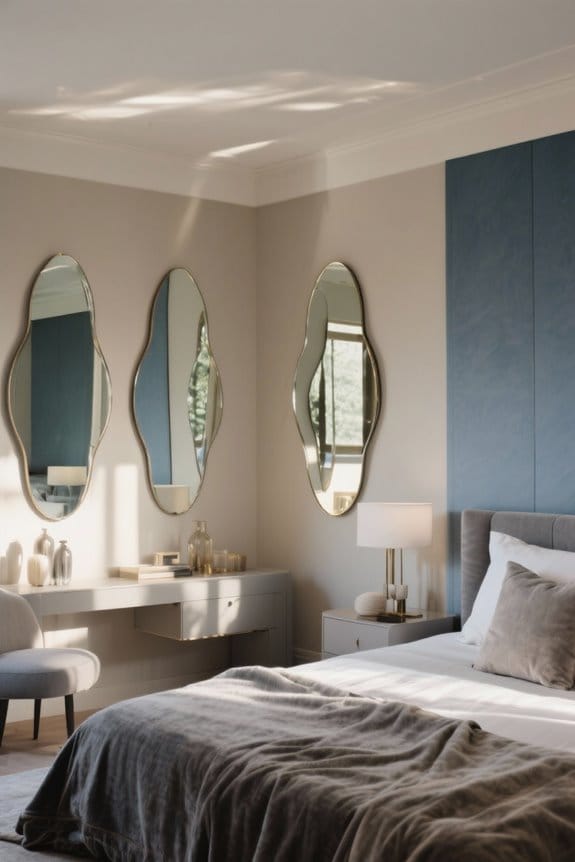

Wall mirror shapes greatly influence room perception, transforming aesthetics and ambiance. Round mirrors, for instance, introduce softness and tranquility, reflecting light that brightens spaces, making them feel more inviting. Conversely, rectangular mirrors provide structure and balance, often enhancing modern interiors by emphasizing symmetry. Abstract mirrors create dynamic focal points with their unique designs, enriching the decor with a creative flair. Understanding these effects allows for strategic choices that elevate overall room design, leading to more stylish and functional spaces. Discover additional insights on this design principle.
Key Takeaways
- Mirror shape affects room ambiance; rectangular mirrors enhance symmetry, making spaces feel larger and more harmonious.
- Round mirrors provide softness and tranquility, reflecting light and complementing organic furniture for a relaxed atmosphere.
- Abstract mirrors introduce creativity and unique design, enriching decor with dynamic visual effects and enhancing spatial perception.
- Grouping mirrors in varied shapes creates a reflective gallery while enhancing light, depth, and visual interest with balanced arrangements.
- Rectangular mirrors hung vertically can accentuate ceiling height, giving the illusion of taller and more spacious rooms.
The Impact of Mirror Shape on Room Ambiance
When considering how mirrors influence room ambiance, it becomes evident that their shapes play a pivotal role in establishing the overall mood of a space. Rectangular mirrors, for instance, provide structure, enhancing visual harmony by emphasizing symmetry and organization. In contrast, round mirrors introduce gentle curves that soften room edges, promoting a relaxed ambiance. Additionally, walls adorned with abstract or irregularly shaped mirrors not only serve as artistic focal points but also inspire creativity and interest. The choice of mirror shape influences light interaction, affecting brightness and depth perception. Designers often utilize varied mirror sizes and shapes strategically to create dynamic energy or a tranquil atmosphere, demonstrating the profound impact of mirror shapes on room ambiance and overall perception. High-quality wall mirrors featuring explosion-proof glass offer both aesthetic benefits and safety, contributing to a secure and visually pleasing environment.
Round Mirrors: Softening Spaces and Encouraging Relaxation

Round mirrors, with their gentle curves and absence of sharp corners, introduce a sense of softness and tranquility that can transform any space into a serene retreat. Ideal for relaxation areas such as bedrooms and living rooms, these mirrors help cultivate a harmonious atmosphere by reducing stress. Their versatility allows round mirrors to serve as decorative focal points that harmonize beautifully with organic-shaped furniture, enhancing the overall flow of a room. Furthermore, when strategically placed to catch natural light, they amplify brightness, creating a fascinating reflective experience. In combination with other soft elements, round mirrors contribute to a cohesive aesthetic, making them essential for spaces that prioritize comfort and relaxation while adding an elegant touch to interior design. A Sweetcrispy Black Round Wall Mirror, with its high-definition, silver-plated surface, ensures a clear and distortion-free reflection, perfect for amplifying the brightness and serenity in any space.
Rectangular Mirrors: Structuring and Balancing Interiors

Rectangular mirrors, with their defined lines and geometric appeal, play a pivotal role in structuring and balancing interior spaces, offering a distinct contrast to the organic flow of round mirrors. Their elongated shape creates the illusion of space, making rooms appear larger and helping to stretch narrow areas. When positioned above furniture or in entryways, rectangular mirrors effectively balance proportions and contribute to a cohesive look. The clean lines enhance a modern aesthetic, harmonizing seamlessly with contemporary decor while complementing traditional decor styles. This versatility allows rectangular mirrors to serve both functional and decorative purposes, adding visual interest to any design scheme, much like a well-placed piece of art, enhancing the overall ambiance of the room. Additionally, incorporating energy-efficient options in lighting alongside rectangular mirrors can further enhance the room’s ambiance while promoting sustainability.
Abstract Shapes: Introducing Artistic Flair and Intrigue
How can the unconventional shapes of abstract mirrors redefine the aesthetic of a space? Abstract-shaped mirrors add a contemporary touch, transforming spaces into artistic displays that capture attention and spark conversation. Featuring unique silhouettes, these mirrors break the monotony of traditional decor, introducing movement and visual intrigue to otherwise static environments. Designers like Jonathan Adler and brands such as West Elm often utilize abstract forms to create dynamic visual effects, playing with light and unexpected reflections to enhance ambiance. By redefining spatial boundaries, abstract mirrors make rooms feel more expansive and inviting, allowing for personal expression that reflects the owner’s unique taste while elevating overall decor. These mirrors are true reflections of creativity within interior design. Abstract mirrors, similar to modern full bedroom furniture sets, can incorporate innovative elements like LED lighting to further enhance visual impact and offer contemporary convenience.
Symmetrical Mirrors: Promoting Visual Harmony and Equilibrium
While incorporating symmetry into a design scheme may seem like a straightforward choice, the impact of symmetrical mirrors on room perception transcends mere aesthetics. These mirrors foster visual harmony and balance, effectively directing attention to designated focal points. When strategically aligned, symmetrical mirrors enhance architectural features, creating a cohesive and inviting environment that promotes tranquility. Additionally, their arrangement optimizes natural light, supporting spatial perception and making areas feel more expansive. Designers often recommend these mirrors for relaxation spaces, as their stability evokes a sense of calm. Whether framed in elegant metal or wood, symmetrical mirrors serve not just as decor but as essential elements fostering a serene atmosphere where structure meets beauty, enhancing both utility and comfort in the home. Incorporating modern wall clocks into these spaces can further elevate the aesthetic, providing both functionality and a stylish focal point.
Mirrors in Modern Minimalist Design
When it comes to modern minimalist design, the integration of mirrors serves not only as a functional necessity but also as a pivotal design element that enhances spatial perception. In these spaces, mirrors featuring clean lines and simple shapes maintain an uncluttered aesthetic while reflecting light. Frameless mirrors blend effortlessly into the environment, emphasizing functionality and simplicity. Strategically placed large mirrors create an illusion of depth, making small areas feel more expansive and airy. Incorporating round or geometric shapes adds a contemporary flair, softening the starkness of angular furniture. The careful selection of framed mirrors can complement minimalist decor, allowing reflections to enhance backgrounds without overwhelming the overall design, fostering a serene and inviting atmosphere. Modern dressers, such as those with integrated charging stations and LED lights, offer multifunctional features that complement the minimalist approach by enhancing both utility and style.
Vintage and Glamorous Mirrors: Creating Focal Points
Vintage and glamorous mirrors, which feature ornate frames and unique shapes, greatly enhance the aesthetic appeal of any room by serving as striking focal points. Designers often recommend using large vintage mirrors as statement pieces to add character and sophistication, while reflecting light can create a sense of depth and perceived space. Glamorous mirrors, with their intricate designs like sunbursts, draw attention and transform ordinary walls into decorative elements. When strategically placed opposite windows, these mirrors maximize natural light, brightening the ambiance while highlighting their role as focal points. By incorporating these enchanting features into interior design, homeowners can achieve a stunning balance of elegance and functionality, enhancing overall room perception with style and grace. Many antique mirrors also come with explosion-proof glass, ensuring both safety and durability while maintaining the classic elegance desired in vintage decor.
The Role of Shape in Small Space Enhancements
In small spaces, the shape of mirrors plays an essential role in enhancing both functionality and aesthetics, offering solutions to make areas feel larger and more inviting. Round mirrors soften angles, creating a flow that feels less confining, while rectangular mirrors, especially when hung vertically, accentuate ceiling height. This combination produces an illusion of taller spaces, ideal for low ceilings. Geometric shapes serve as decorative focal points, enhancing visual interest and diverting attention from limited areas. Strategically arranging smaller mirrors can also expand the perception of space, as varied shapes create unique reflection patterns, brightening dull corners. By manipulating light and depth with these mirror shapes, small spaces can feel considerably more open and expansive, transforming interiors into inviting sanctuaries. Incorporating versatile cordless designs in the vicinity of mirrors can further enhance the ambiance by providing adaptable lighting solutions that complement the reflective surfaces.
Grouping Mirrors: Crafting a Reflective Gallery Wall
Crafting a reflective gallery wall opens up exciting possibilities for enhancing interior spaces, particularly in areas where light and visual depth are paramount. Grouping mirrors in various shapes creates a dynamic and visually interesting gallery wall, maximizing light reflection. Symmetrical arrangements bring order and balance, while eclectic clusters allow for personal expression. To maintain visual cohesion, consistent spacing—typically 2 to 3 inches—between mirrors is vital, ensuring the design does not feel cluttered. Incorporating a variety of frame styles from brands like West Elm or CB2 enriches the overall decor. Ultimately, a well-designed mirror gallery wall amplifies natural light, enhancing ambiance and contributing to a sense of spaciousness, making it an essential element in contemporary interior design. For those looking to incorporate such designs into their bedroom, selecting high-quality hardwood options for accompanying furniture, like wooden headboards, ensures both aesthetic appeal and durability.
Choosing the Right Shape for Your Interior Theme
Selecting the right mirror shape can greatly influence the overall ambiance and style of an interior space. Round mirrors, for instance, soften sharp lines and foster a relaxed atmosphere, harmonizing well with organic décor themes like coastal or bohemian styles. In contrast, rectangular mirrors instill structure and balance, complementing modern or minimalist interiors that prioritize simplicity. Abstract mirror shapes bring a unique artistic flair that appeals to eclectic designs, while symmetrical mirrors enhance visual harmony, catering to traditional spaces that embody order. By choosing the right shape, individuals can evoke distinct emotions, enhancing overall aesthetics and coordinating effectively with the interior theme. Ultimately, each reflective surface serves as an essential design element in shaping room perception and elevating the space. Additionally, integrating smart home connectivity in your interior design can enhance functionality, allowing for seamless control of smart devices and contributing to a cohesive modern living environment.
Frequently Asked Questions
What Is the Effect of Mirrors in a Room?
Mirrors in a room enhance spatial dynamics through reflective surfaces, light manipulation, and visual depth. Their decor influence shapes room ambiance, integrates art, and varies frame styles, aligning with Feng Shui principles through color reflection.
What Is the Mirror Perception Theory?
The mirror perception theory reveals that reflective surfaces create a mirror illusion, enhancing spatial enhancement and visual depth. This theory emphasizes design principles and light manipulation, influencing room dynamics and generating significant psychological impact and aesthetic appeal.
Which Shape Mirror Makes a Room Look Bigger?
Round mirrors enhance visual space by softening harsh lines, while rectangular and oval mirrors can also create illusions of depth. Wall placement, along with light reflection, influences decor styles, contributing greatly to perceived room size.
How Does the Shape of a Mirror Affect the Reflected Image?
The shape of a mirror impacts reflected angles and mirror symmetry, affecting light reflection and image distortion. It enhances shape, creates visual framing, alters boundary perception, and influences focal points, contributing to design contrast and spacious illusion.


