


Lamp shade materials markedly affect how light is filtered and diffused. Fabric shades create a soft, ambient glow, while frosted glass provides an even diffusion, and metal shades focus light for task-oriented spaces. Darker colors tend to absorb light, resulting in intimate illumination, whereas lighter shades reflect brightness. Designers often choose materials based on desired effects; for example, a silk fabric can exude luxury. This understanding lays the foundation for further exploration of lighting design principles.
Key Takeaways
- Fabric shades scatter light evenly, creating a soft ambiance, while opaque materials, like metal, provide targeted illumination for tasks.
- Translucent materials produce a gentle, ambient glow, whereas dark opaque shades absorb light, resulting in intimate brightness.
- Frosted glass diffuses light effectively, mitigating glare, while clear glass focuses light into sharper beams.
- Shade color significantly influences light filtration; dark shades absorb and narrow light, while lighter shades diffuse and reflect for increased brightness.
- Patterns and textures in lamp shades can localize light passage or create warm ambient effects, affecting the overall room atmosphere.
Understanding Light Diffusion
When exploring the intricacies of light diffusion, it becomes apparent that the choice of lamp shade material plays a pivotal role in how light interacts with a space. For instance, fabric shades, characterized by their ability to scatter light evenly, create a soft ambiance ideal for relaxation. In contrast, glass shades often focus light into a more concentrated beam. Opaque materials, like heavy fabrics or metals, limit light diffusion, achieving distinct lighting effects. The color of the shade also influences light filtration; dark shades absorb light, fostering a cozy atmosphere, while lighter options enhance brightness through reflection. Furthermore, specialty liners can boost light reflection, maximizing luminosity, particularly beneficial in darker spaces, showcasing the versatility of various lamp shade materials. Many modern lighting options are designed to be energy-efficient, which not only reduces electricity usage but also extends the lifespan of the light source.
Impact of Translucent vs. Opaque Materials
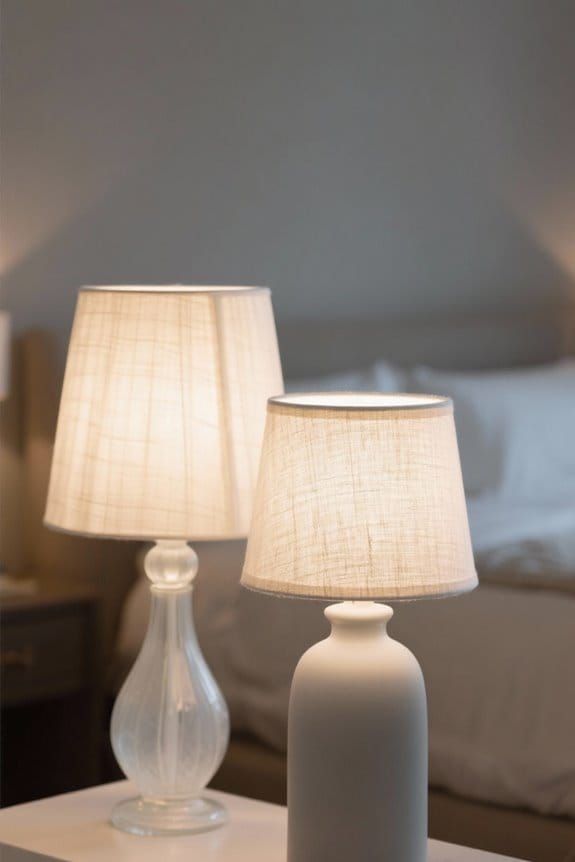
The choice between translucent and opaque lamp shade materials greatly shapes the ambiance and functionality of lighting in any given space. Translucent materials, like fabric shades and certain papers, diffuse light, creating a soft, ambient glow that enhances the room’s mood. This effect can vary; lighter fabrics offer a warm, inviting light, while darker ones provide greater light control. Conversely, opaque materials such as metal and some plastics deliver focused illumination, ideal for task lighting, which reduces glare and enhances visibility. Additionally, glass shades can offer versatility; frosted glass diffuses light effectively, while clear glass directs it. Together, these choices greatly influence brightness and the overall lighting effects, ultimately impacting how colors and textures interact within the environment. Modern LED floor lamps often feature customizable dimming and adjustable color temperatures, allowing users to fine-tune the lighting ambiance to suit their preferences.
Common Lamp Shade Materials and Their Light Effects

Selecting the right lamp shade material can dramatically influence both the aesthetic and functional qualities of lighting. Fabric lamp shades, such as cotton and linen, produce soft, diffused light, while silk adds a touch of luxury. Paper lamp shades vary as well; washi offers a gentle glow, whereas parchment creates a warm ambiance. In contrast, glass lamp shades can enhance or filter light output, with frosted varieties softening glare and colored options shaping intensity. Meanwhile, metal lamp shades direct light for task lighting, making them ideal for focused activities. Ultimately, natural lamp shades, crafted from materials like rattan and bamboo, create unique patterns, contributing an earthy charm that enlivens any space, effectively showcasing the diverse world of lamp shade materials. When choosing lighting options, consider energy-efficient LED fixtures which provide significant savings and a long lifespan, as they can complement various lamp shade materials for both style and sustainability.
The Role of Color in Light Filtration
Color greatly impacts how light is filtered through a lamp shade, influencing not only the ambiance of a space but also the functionality of the light itself. Darker shades often absorb light, resulting in focused, intimate illumination, while lighter shades diffuse light, enhancing brightness. Translucent fabrics in whites or creams promote even light distribution, making them perfect for reading nooks. On the other hand, shades with colored outer materials, like rich reds or tranquil blues, craft specific atmospheres. Metallic linings—such as gold or silver—reflect light uniquely, creating warm or cool tones. Additionally, fabric shades featuring patterns, like stripes or geometrics, add playful shadows to spaces, transforming them into dynamic environments without overwhelming the room’s overall aesthetic. Many modern wall sconces offer adjustable color temperatures, allowing for customization of ambiance and functionality in various rooms.
Patterns and Textures: Influencing Light Distribution
Patterns and textures play a significant role in how light is distributed through lamp shades, creating unique environments in any space. Intricate designs, such as geometric shapes or floral motifs, allow localized light to shine through, while diffusing light elsewhere, shaping the overall ambiance. Textured fabrics, like linen or burlap, enable a warm ambient glow as light passes through, softening harsh illumination. Particularly, woven materials can scatter light differently; the complexity and density of the weave affect brightness. Translucent materials enhance color vibrancy and pattern impact, while dark shades tend to focus light narrowly, contrasting with lighter shades that provide a broader illumination pool, contributing to the emotional atmosphere of a room. A new sentence with energy-efficient options such as LED bulbs, promoting energy savings and reduced electricity costs.
Comparative Analysis of Various Lamp Shade Materials
When considering lamp shade materials, one finds a fascinating array of options that can greatly alter the lighting experience within a room. Fabric lampshades, such as those crafted from cotton or linen, provide a warm light with diffuse light qualities, softening harsh illumination while allowing light penetration to vary based on the weave. Conversely, silk lampshades emit a luxurious glow perfect for elegant spaces, albeit with less durability. Paper shades, like washi and parchment, filter light uniquely, offering gentle translucence and rustic charm respectively. Glass shades, particularly frosted varieties, diffuse light evenly, minimizing glare while creating a gentle ambiance. Natural materials, such as rattan or bamboo, produce an organic look, casting patterned shadows and delivering a unique light effect in any setting. Energy-efficient features, primarily with LED compatibility, are increasingly becoming a focus in modern lamp design, blending functionality with sustainability.
Choosing the Right Material for Desired Ambiance
Selecting the appropriate lamp shade material can greatly enhance the ambiance of a room, akin to choosing the right fabric for a suit; both decisions shape perceptions and experiences. Fabric or paper shades can softly diffuse light, creating an ambient glow perfect for cozy areas. In contrast, glass lamp shades offer gentle light diffusion while reducing glare, suitable for modern designs. Metal shades, however, direct light for task lighting, delivering bright illumination without softening the output. Additionally, the choice of liner material considerably affects the ambiance; a white liner maximizes brightness, whereas darker hues create a warmer glow. Each material presents opportunities for artistic designs, enhancing the overall aesthetic while fulfilling the desired ambiance for any space. When selecting an industrial floor lamp, consider whether the seeded glass shade enhances the lighting effect you wish to achieve in your home.
Frequently Asked Questions
What Type of Lampshade Gives the Most Light?
Lampshade design considerably influences light output, with larger shades maximizing light diffusion and enhancing room atmosphere. Bulb brightness, color temperature, and proper shade height also impact energy efficiency and directional lighting, affecting overall illumination.
What Is the Best Material for a Lampshade?
The best material for a lampshade varies based on design styles and preferences; fabric choices offer warmth, glass options provide clarity, while metal finishes guarantee durability, all with distinct light diffusion and maintenance requirements affecting overall price comparison.
Do Lamp Shades Affect Light Brightness?
Lamp shades dramatically influence lamp brightness impact; color choices and materials like fabric versus glass employ light diffusion techniques. Shape effects further alter ambiance, enhancing mood and energy efficiency—fascinating interior design tips for maximizing lamp functionality!
Why Are Acrylic Lamp Shades Better?
Acrylic lamp shades excel due to their acrylic clarity, durability comparison, and light diffusion properties. They offer design versatility, color retention, and weight advantage, combined with maintenance ease, UV resistance, and cost efficiency, minimizing environmental impact.


